
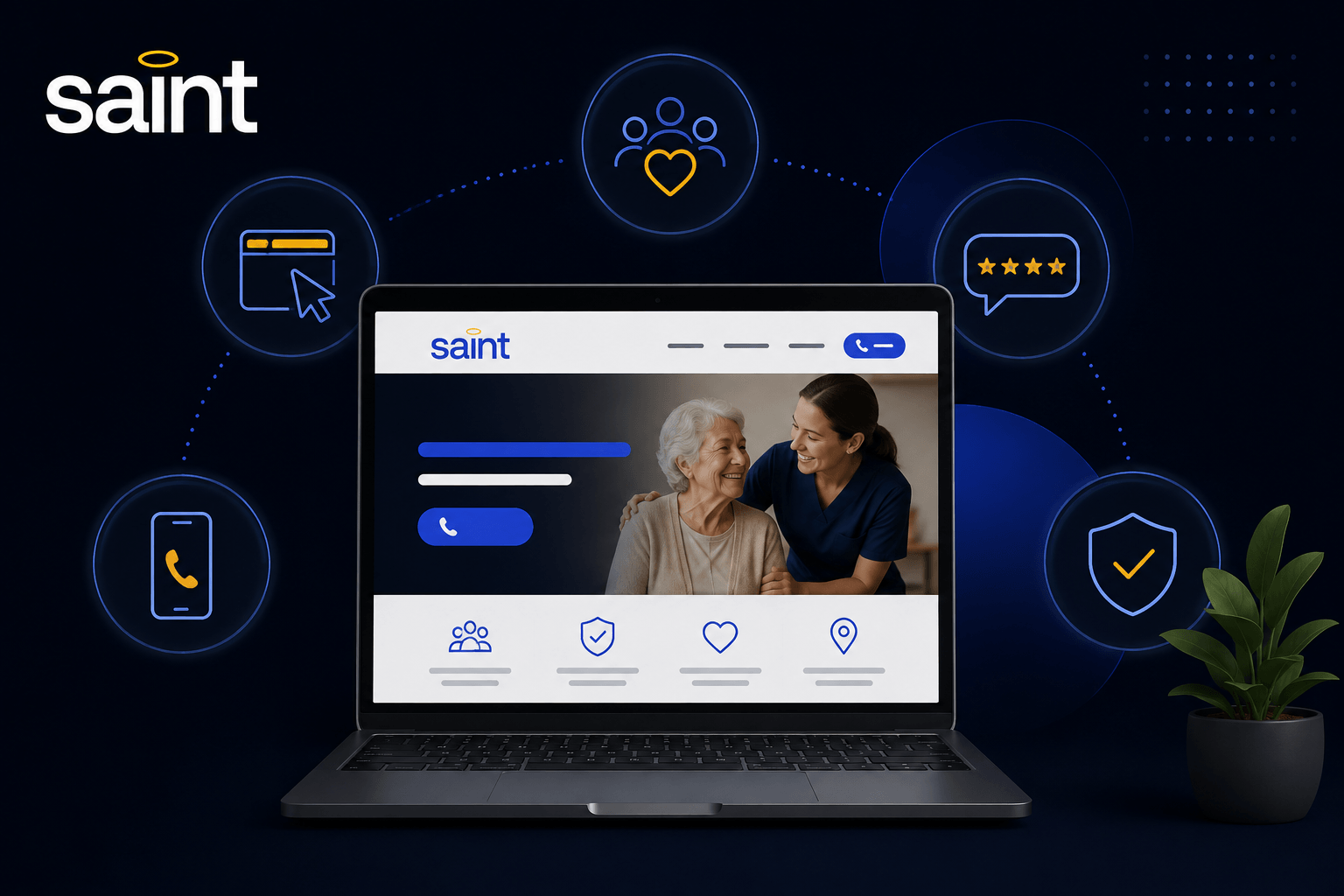
Your website is often the first impression families have of your home care agency.
When someone is searching for care for a parent, spouse, or loved one, they aren't just looking for information. They're deciding whether they trust your agency enough to make a phone call.
A modern, professional website can build confidence before your team ever speaks to a potential client. On the other hand, a confusing or outdated website may cause families to leave and contact another provider instead.
Here are 15 elements every high-performing home care website should include.
Within the first few seconds, visitors should understand:
Avoid vague headlines like:
"Compassionate Care You Can Trust."
Instead, be specific:
"Trusted In-Home Care Services for Seniors Throughout Anne Arundel County."
Don't make families hunt for your phone number.
Include:
Keep them visible throughout the website.
Every page should encourage visitors to take the next step.
Examples include:
Without clear calls to action, visitors may leave without contacting you.
Reviews help reduce uncertainty.
Display Google reviews throughout your website, not just on a testimonials page.
Positive experiences from other families can provide the reassurance visitors need before reaching out.
Whenever possible, use real photos of your caregivers and staff.
Authentic images build trust far better than generic stock photography.
Don't place every service on one page.
Create dedicated pages for services like:
These pages help both visitors and search engines.
Families often search by city.
Creating pages for each community you serve improves local SEO, which can make all the difference for your business.
Local SEO helps your home care agency appear in Google Search and Google Maps when people in your service area are actively looking for care.
Many families have similar concerns.
Answer questions such as:
An FAQ section builds confidence while reducing barriers to contacting you.
Many families begin searching on their phones.
Your website should load quickly, display properly on smaller screens, and make it easy to call your agency with a single tap.
Slow websites lose visitors.
Compress images, minimize unnecessary scripts, and regularly test your site's performance.
Families aren't always ready to hire immediately.
Publishing educational blog articles helps answer questions while improving your visibility in Google Search.
People want to know who's caring for their loved one.
Tell your story.
Introduce your leadership team.
Explain what makes your agency different.
Trust is everything in home care.
Include elements such as:
These details reinforce your credibility.
Your website should tell you what's working.
Track:
Without this data, it's difficult to improve your marketing.
Visitors should be able to find what they need quickly.
Avoid complicated menus.
Keep navigation organized with clear categories for services, locations, about, resources, and contact information.
A successful home care website doesn't rely on flashy animations or complicated designs.
Instead, it focuses on making families feel informed, comfortable, and confident enough to take the next step.
By combining a user-friendly experience with helpful information and clear calls to action, your website can become one of your agency's most valuable marketing tools.
How often should I update my home care website?
Review your website every few months to ensure your services, contact information, team members, and blog content remain current.
Does every home care agency need a blog?
Yes. Regularly publishing helpful articles can improve SEO, build trust with families, and answer common questions before someone contacts your agency.
How important is website speed?
Very important. A slow website can increase bounce rates and negatively impact both user experience and search rankings.
Can a website generate home care leads without Google Ads?
Yes. Many agencies generate leads through SEO, Google Business Profile optimization, referrals, and educational content. Combining these strategies with a high-converting website often produces the best long-term results.
Grow your business online fast!
It includes strategies on:
Where to get reviews
Evaluating your online presence
Setting a review goal for your business
Avoiding bad reviews
Maximizing positive reviews